


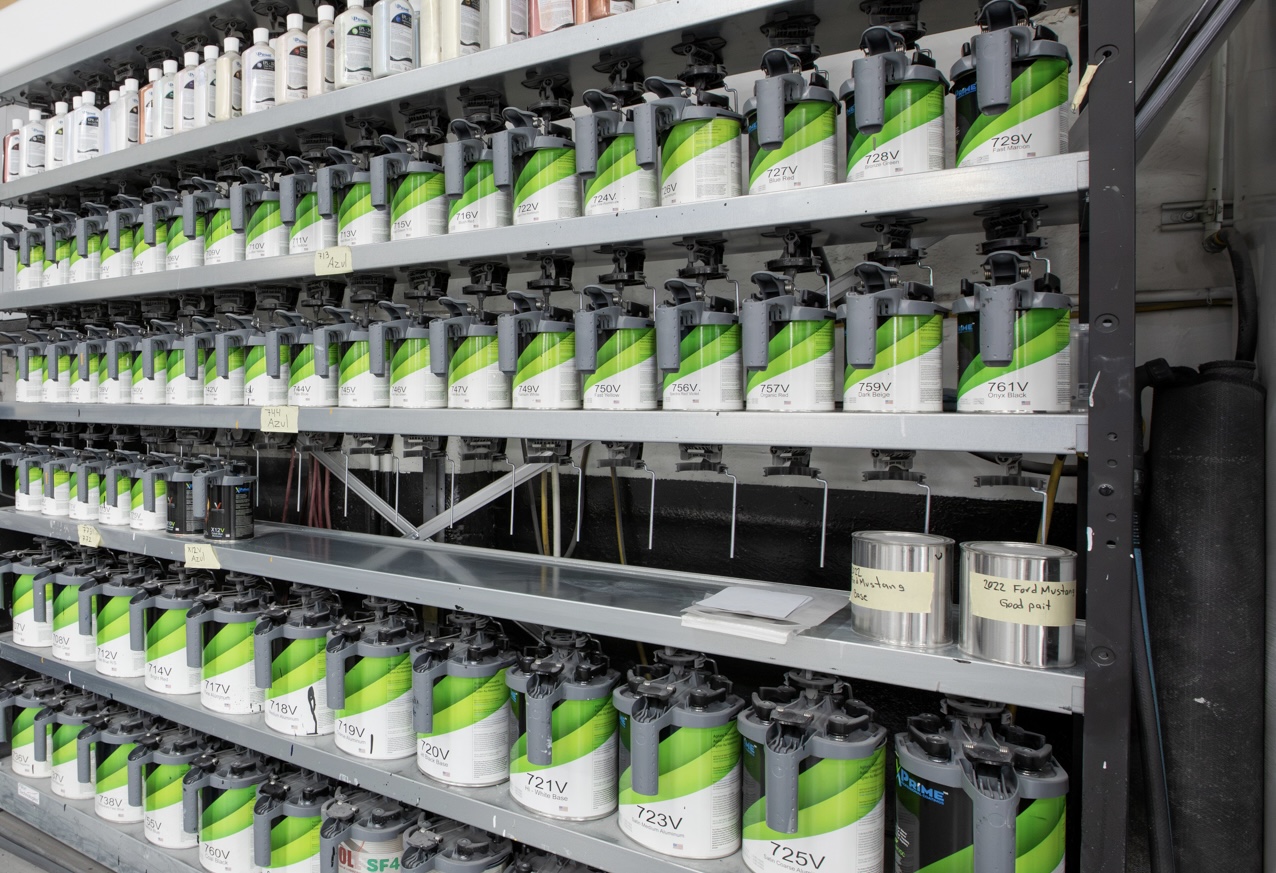
One of the most common questions drivers have after body work is simple:
Will the repaired area match the rest of my vehicle?
This becomes especially important when only one bumper, fender, door, or other panel needs refinishing.
Automotive paint matching is more involved than simply choosing a color with the same name.
The repair process needs to consider the vehicle's paint information, its current finish, surface preparation, application, and how the repaired area transitions into the surrounding panels.
Why Automotive Paint Can Be Difficult to Match
Vehicle finishes can include:
- Solid colors
- Metallic finishes
- Pearl finishes
- Multi-stage paint systems
Even two vehicles with the same original paint code may not look exactly the same years later.
Sun exposure, weather, age, previous repairs, and normal wear can all affect how paint looks over time.
That means the factory color information is often the starting point, not the entire process.
Step 1: Identify the Paint Information
Technicians first identify the vehicle's paint information and appropriate formula.
This gives the refinishing process a starting point for creating the correct color.
Step 2: Evaluate the Existing Finish
The current appearance of the vehicle also matters.
Technicians compare the repair area with the surrounding panels to understand how the existing color looks today.
The goal is to create a finished repair that works visually with the rest of the vehicle.
Step 3: Prepare the Surface
Good paint work depends heavily on preparation.
Before refinishing, the panel may need to be:
- Repaired
- Sanded
- Smoothed
- Primed
- Cleaned
- Masked
Proper preparation creates the foundation for a cleaner and more consistent finished surface.
Step 4: Apply the Finish
The paint system is applied according to the needs of the repair.
Depending on the vehicle and color, this may involve:
- Base color
- Additional color stages
- Clear coat
- Controlled refinishing techniques
Application technique matters, especially with metallic and pearl finishes where the appearance can change depending on how the material is applied.
Step 5: Blend When Appropriate
Sometimes achieving a natural visual transition involves blending color into an adjacent area rather than creating a hard stopping point between new and existing paint.
Whether blending is necessary depends on the repair location, paint color, affected panel, and overall repair plan.
Step 6: Inspect the Finish
Once refinishing is complete, the repaired area should be evaluated for:
- Color consistency
- Gloss
- Texture
- Coverage
- Transition into surrounding panels
The goal is for the repaired section to look like part of the vehicle rather than a separate newly painted piece.
Paint Is Part of the Repair, Not Just the Final Touch
Even excellent body work can stand out if the color or finish does not match properly.
That is why surface preparation, paint matching, application, and final inspection are all important parts of professional collision repair.
Crown Towing & Collision Repair provides auto body painting and collision refinishing for vehicles in Portland.
Call 503.705.7000 to request an estimate.


